GtPGKogPYT4p61R1biicqBXsUzo" /> Google+ I Smell Sheep: nonfiction
Showing posts with label nonfiction. Show all posts

Thursday, November 20, 2025

Wicked Witch of the West: The Enduring Legacy of a Feminist Icon + excerpt


While researching this book, I discovered just how much world history has culminated to give us what we now recognize as the icon of the Wicked Witch. Her evolution was absolutely fascinating to trace. We tend to think of witches in fiction as timeless villainesses who have “always” existed in a fixed way, but that couldn’t be further from the truth. The figure of the witch reaches back to ancient civilizations—where she could be feared, revered, or misunderstood—and over the centuries she has been shaped by religion, politics, gender norms, and folklore. What struck me most was how, in the last hundred years especially, the witch has transformed from a symbol of evil into one of independence and feminine strength.

That journey mirrors so much of women’s history itself: the push from suppression to empowerment, from being silenced to reclaiming voice and agency. Even on the set of The Wizard of Oz, you can see this cultural tension at play in the contrast between Margaret Hamilton’s “wicked” witch and Billie Burke’s “good” one—both the characters and the actresses were shaped by typecasting, the misogynistic “old studio system,” unrealistic beauty standards of the Golden Era of Hollywood, and class perceptions of their time. This was heartbreaking, yet important for me to better understand, because we—so many decades removed from their era—tend to see everyone in films like The Wizard of Oz as glamorous stars, but in real time, there were studio system biases that caused great woundedness for many like Hamilton who dared to be different. The harmful stereotyping in bygone eras not only shaped the icon of the Wicked Witch, but actresses like Hamilton who portrayed her.  

Digging into these layers made me realize that the Wicked Witch isn’t just a fictional figure, she’s a cultural mirror. Every generation redefines her based on what it fears—or celebrates—about powerful women. That discovery gave the project a deeper meaning and made me fall even more in love with her story.

Wicked Witch of the West: The Enduring Legacy of a Feminist Icon
by Lona Bailey
October 2, 2025
Genre: Popular Culture in Social Sciences, Movie History, Literary Criticism & Theory
An empowering look at one of pop culture's most enduring feminist icons, The Wicked Witch of the West.

More than 125 years after her introduction, the Wicked Witch of the West remains an icon of popular culture. Known by many names-from “The Wicked Witch of the West” to Evillene, Elphaba, and Theodora-she consistently defies expectations and wields her power unapologetically. At the heart of her everlasting appeal is her embodiment of feminist ideals that resonate today.

In Wicked Witch of the West: The Enduring Legacy of a Feminist Icon, Lona Bailey explores the radical feministic undertones of one of the most enduring characters in popular culture. Introduced in 1900 through L. Frank Baum's The Wonderful Wizard of Oz, the Wicked Witch has captivated generations as both a symbol of fear and empowerment. More than just a villain, she embodies rebellion and resistance, refusing to conform to the roles historically assigned to women. This book traces her transformation over the past century, highlighting how she has evolved through countless adaptations from The Wizard of Oz to the film adaptation of Wicked while maintaining her core identity as a powerful, defiant figure.

To understand why the Witch remains captivating more than a century after her creation, Bailey delves into the radical feminism underlying her character and examines how she has been reinterpreted since her debut. From the suffrage movement to the fight for reproductive rights, and from the #MeToo movement to ongoing battles against gender stereotypes, the Witch symbolizes the struggles and triumphs women face. Her presence transcends mere performance; she serves as a reminder that the fight for justice, equality, and autonomy continues. By exploring the Witch's feminist evolution, readers will gain insight into why her character resonates with generations of women.

Excerpt: 

It’s quite impossible to explore the icon of the Wicked Witch without acknowledging Margaret Hamilton’s unforgettable portrayal of the character, as she is widely credited with introducing her to the world in a way that has captivated audiences ever since. Was it the green skin, broom, cackling laughter, exaggerated hook to her nose, or sharp-tongued quips that embedded her into cultural consciousness? Perhaps all of those things and more initially made the world fall fast and hard for the fiendish character, but only in the context of Margaret Hamilton’s simply splendid portrayal.

“I was walking down Fifth Avenue in New York not long ago when a nice-looking young man called to me. ‘Miss Hamilton,’ he said, ‘you don’t know me, but I know you. You scared the pants off me when I was a little boy,’” Margaret Hamilton recalled.1 The barely five-foot-tall Margaret “Maggie” Hamilton has managed to terrify millions for more than eighty-five years in her characterization of L. Frank Baum’s Wicked Witch of the West. What began as a fairly one-dimensional antagonist with few descriptives beyond her general reputation for wickedness, was suddenly and frighteningly brought to life thirty-nine years after she was penned in Baum’s book and the legend of The Wizard of Oz truly began. In following suit with what “that little animation company” Walt Disney did in the successful film adaptation of the children’s fantasy story Snow White and the Seven Dwarfs, MGM bought the rights to adapt Baum’s novel The Wonderful Wizard of Oz to brilliant Technicolor in 1938. The demigod of MGM, Louis B. Mayer, purchased the book’s rights in the fall of 1937 upon the suggestion of Mervyn LeRoy. Mayer saw grand potential in a musical version of the children’s novel and with LeRoy and Arthur Freed on board, revisions toward final production were initially promising. The script went through a merry-go-round of revisions from its initial draft to its on-screen presentation with cuts, edits, rewrites, and additions from legions of hired, fired, and rehired writers.

The only mainstays were the leading cast—well, sort of. Judy Garland was cast as Dorothy, Frank Morgan as the Wizard (and several other supporting roles), Ray Bolger as the Scarecrow/Hunk, Bert Lahr as the Lion/Zeke, Jack Haley as the Tin Man/Hickory, Billie Burke as Glinda, and Hamilton as the Wicked Witch of the West/Miss Gulch.

Originally, actress Gale Sondergaard was cast as the Wicked Witch, but being a bit too glamorous for such a haggy and undesirable part, Sondergaard withdrew from the production and Hamilton was offered the role just three days before filming began. Hamilton had appeared in several films for MGM by 1938, and with her distinct features and knack for spinster supports, Director Victor Fleming thought she was a natural choice for the queen of mean.

Whether or not Hamilton knew of Matilda Joslyn Gage as “the woman behind the curtain” of Baum’s novel, in her portrayal, she creatively matched the feministic intentions of the original story’s creator. While the Technicolor Wizard of Oz fostered the stereotypical image of what “witches” were believed to look like in the 1930s.

Witches were generally considered sallow, sexless figures whose rebellious and/or peculiar behavior had caused them to be ostracized by the general public. One early exception to this is Edmund Spenser’s The Faerie Queene (1590) with the character of Acrasia, the enchantress who uses her beauty to seduce and corrupt knights. Unlike the longstanding, older, and malevolent image of witches, Acrasia is described as physically alluring and beguiling, using her appearance and charm as weapons to achieve her goals. Though still a nonconformist in Spenser’s story, Acrasia’s beauty masks her dangerous nature, a theme that has been echoed in later depictions of witches in literature and folklore, though most classic literature purports “witch” to be synonymous with “ugly.”

Nonconformist characteristics (described in horrid terms) usually included degrees of unsightly yellow or red complexions, unkempt, stringy hair, exaggerated facial features, and of course, warts. For example, William Shakespeare’s witches, the “Weird Sisters” in Macbeth, are described as dirty, haggish rebels who live separately from society and possess not only mystical powers but also distinctively masculine features such as beards. Any beauty that was ascribed to a witch before the postmodern reinvention of her image was usually only a magical cover for her “true” haggish nature, which she ruthlessly used to further her evil agenda. For better or for worse, MGM began the reinvention process of the witch, and Margaret Hamilton’s face was the canvas on which they painted—literally. With a hooked nose, green skin, pointy chin, crystal ball to spy on her enemies, and dressed all in black with a flying broom, Hamilton herself subtly fostered a more progressive approach to villainy in that inch of redemption she gifted the character through her own touch of feministic essence despite her convincing malevolence on screen.

Contrary to most villainesses in early literature, film, and television, the Wicked Witch was not a masculine character. Perhaps we wouldn’t call her “pretty” in the green paint and prosthetics, but still Hamilton brought a subtle, yet undeniable femininity to the role that changed the “look” of a “witch” in the general sense. The paradox of Hamilton’s portrayal in such a traditional era was that she brought both femininity and feminism to the characterization. Billie Burke, on the other hand, certainly brought femininity to “Good Witch Glinda,” and her delicate, docile characterization stuck closely by Baum’s original non-feministic “Good Witch.” Burke seemed to naturally exude a dainty energy and sense of glamour as Glinda, which is also what the role required, but as far as MGM was concerned, Margaret Hamilton’s subtle artistic strokes of feminism weren’t of importance just so long as she, as the “bad one” was scary and not too “pretty.”


About the author
website
Dr. Lona Bailey is an award-winning, Amazon-bestselling author and a leading researcher on the Golden Age of Hollywood. Her books include Uncredited: The Life and Career of Actress Virginia Gregg, Voice of Villainy: The Betty Lou Gerson Story, Mrs. Radio: The Cathy Lewis Story, and Some Small Nobility: The Biography of Joan Banks Lovejoy. As a PhD and former therapist, Dr. Bailey is passionate about telling the untold stories of women who perhaps weren’t finished using their own voices during their earthly journeys. Her biographical works offer a balanced perspective on the multidimensional elements involved in feministic legacy maintenance, with particular interest in the preservation efforts surrounding the Golden Age of Hollywood.

Dr. Bailey's Voice of Villainy biography was a finalist in the 2023 International Book Awards and won the Gold Medal in Dan Poynter's Global Ebook Awards that same year. She has been featured on The Wolfe Den Show, in Film Daily, and The Los Angeles Tribune.

Dr. Bailey’s most recent books include Lead Thou Me On: Titanic's Countess of Rothes (Ambassador International) and The Wicked Witch of the West: The Enduring Legacy of a Feminist Icon (Bloomsbury), which Gregory Maguire praises as “a riveting analysis of one of the most fearful and beloved characters in our national psyche.” One of her upcoming books, Wasp Woman: Hollywood's Susan Cabot (Histria Press, 2026), is the basis for a recently completed docuseries with Embankment Films, set to premiere at the 2025 Sundance Film Festival.

Monday, March 24, 2025

Magical Elements of the Periodic Table (Presented By The Alchemical Wizards Book One) by Sybrina Durant

What inspired you to become an author?
I started trying my hand at writing as soon as I could read. I always loved singing and reading poetry, so at first I only wrote song lyrics and poetry. Before long, other types of books caught my fancy. . .mainly fantasy. I’ve also always had an affinity for researching and categorizing information. These are the things that ultimately led to my first book about a metal horn unicorn tribe in which each character had a magical power based on the metal of their horns. This was long before computers so all of my research was done by hand from dictionaries and encyclopedias.

Do you have a specific writing style?
I’d say my specific writing style is educational fantasy. The work I did on my unicorn fantasy story is what led to the idea of writing the first in my series of illustrated periodic table books. I already had the beginnings with 12 unicorns ready to present 12 elements of the periodic table. I had previously decided that this book would be laid out in alphabetical order so I only needed to come up with 14 more unique unicorns and elements to complete the alphabet. How hard could it be, I thought… Turns out it was quite a bit more difficult than I anticipated because not all letters of the alphabet are represented by an element. I had to get quite creative to account for all of the letters.

Do you write in different genres?
I do write in other genres but this book series has turned into a several year project so everything I’ve written in the past few years, including about 100 articles, have been about elements of the periodic table. As I mentioned, the first book in this series had Metal Horn Unicorns presenting 26 elements. Next, came Elemental Dragons presenting 26 elements, also in alphabetical order. This current book features Alchemical wizards discussing more elements. In fact, there were so many elements to be covered by the wizards that I had to split them into 2 books. Book 2 will be out later this year. After that, Actinide Knights and Radioactive Goblins will finish up the series.

If yes which is your favorite genre to write?
I love to write books that are illustrated because you can use the pictures in a thousand ways (like the previously mentioned articles) for marketing and promotion. For the Magical Elements of the Periodic Table series of books, I have used the graphics for creating memes for social media, the video shorts, activity pages to help with learning and remembering about each element, trading cards for sharing with friends, a bingo game, and even t-shirts. All of these can be found at https://www.magicalptelements.com . I’ve also utilized the pictures to put together special pages on the website where I’ve placed links to my research so that readers can check my facts and learn more themselves.

Do you have a song or playlist (book soundtrack) that you think represents this book?
The theme song for all of the Magical Elements of the Periodic Table books is called “No Metal – No Magic”. The lyrics for it feature the metal horn unicorns but it’s still applicable for all of the elementals. Their motto, after all, is No Metal – No Magic. . . and No Technology. Think about that for a second. There literally would be no modern life without the amazing gifts the elements have provided mankind over the years. The instrumental music for the song is the background music for all of the video shorts that I’ve, so far, created for the magical elementals. One day, I hope to have a video for each of the 118 elementals and the elements they represent. Check them out at https://www.youtube.com/playlist?list=PLybqF-7D4W3EuoE2dzd9xbt4gleDECHga

Nov. 1, 2024
Genre: Children’s Science Book
Publisher: Sybrina Publishing
ISBN: ‎979-8345317112
ASIN : ‎B0DLW662B8
Number of pages: 44
Word Count: About 1000.
Cover Artist: Pranavva
No metal, no magic…and no technology.

Kids love magic and the periodic table is full of magical things. Alchemical wizards introduce kids to scientific facts and the magic of the elements.

The Alchemical Wizards, along with their techno-magical unicorn and dragon friends from the first 2 Magical Elements Books are the perfect group to introduce you to metals and other elements in the Periodic Table. Hopefully, the Magical Elements of this periodic table book will spark an interest in the magical and real-world properties of all the metals and other elements known today.

You may be surprised at how prominently they feature in our everyday lives.


About the Author:
Website/Newsletter-Bonus Materials-Twitter-LinkedIn-Instagram-Amazon-Goodreads
Facebook Magical Elements of the Periodic Table
Sybrina Durant is the author of several educational children’s books including the Learn To Tie With The Rabbit and The Fox series as well as The Magical Elements of the Periodic Table series. Her motto is “capture a child’s interest while they’re young and they will remember the lesson forever”.

Thursday, May 30, 2024

Magical Elements of the Periodic Table Presented Alphabetically by the Elemental Dragons (Magical Elements of the Periodic Table Book 2) by Sybrina Durant + giveaway

No Metal No Magic. . . and No Technology.

Magical Elements of the Periodic Table Presented Alphabetically by the Elemental Dragons
Magical Elements of the Periodic Table Book 2

by Sybrina Durant
Genre: Childrens Chemistry, Middle Grade Fantasy Educational
In this unique alphabet book, members of the Elemental Dragon Clan, present 26 Magical Elements of the Periodic Table in alphabetical order. Each member of the clan has an element tipped tail. They also have magical powers based on the properties of their metals. There are no more perfect groups than unicorns and dragons to familiarize with elements from the Periodic Table. Their theme is "No Metal, No Magic. . .and No Technology".

In this book, Antz starts out the book by introducing the very necessary metal, Antimony on his element page. Zora rounds out the alphabet by presenting scientific facts and other fun information about the metal, Zirconium, on her elemental page. In all, readers will get some great insight into the properties of 26 elements from the periodic table. Each Page is Full of Amazing Facts and Tons of Fun.

There's A Magical Elemental Themed Periodic Table, Too!

This unique book will help tweens, teens and anyone else quickly absorb the elements of the Periodic Table.

REMEMBER. . .
No Metal,
No Magic
And No Technology.
It's Techno-Magical.

Amazon-Author's Site-B&N-Bookbub-Goodreads

Magical Elements of the Periodic Table Presented Alphabetically by the Metal Horn Unicorns
Magical Elements of the Periodic Table Book 1

Get this book in soft cover print to experience it fully.

Metals and all the other elements from the periodic table make everything seem magical.

You can see it everywhere… in buildings. . .transportation…communications. . .medicines and even in the food you eat!

All technology and everything that makes life modern come from the magical elements in the earth, water and the air.

Think of it like this, “No Metal – No Magic…and No Technology.”
You can learn about all about it in The Magical Elements of the Periodic Table Presented Alphabetically by The Metal Horn Unicorns.

26 techno-magical elements are presented from A to Z by the magical metal horn unicorn tribe from Unimaise.

Every element page shows you

1. Where the featured element comes from.
2. When it was discovered.
3. Scientific info about the element.
4. Everyday uses for it.
5. Plus a bunch of interesting facts!
6. Last but not least, each element is represented by a unicorn who wields its magical powers.

The theme of “No Metal, No Magic” flows throughout the entire book. Ultimately, if there’s no metal, there can be no magic. Any metal-horned unicorn will tell you that. Without metal and all the other elements of the periodic table there would be no technology for us modern people, either. Now, that’s “Techno-Magical!”

The book also has an amazing unicorn themed periodic table plus special pages featuring
elemental compounds and alloys. Trading cards representing each of the 26 unicorns and their elements plus fun lesson cards and more are also available as printable downloads. Kids will have fun singing along with the No Metal, No Magic song, too. Learn more about all the elements in this book at https://www.sybrina.com/muapt

Amazon-Author's Site-B&N-Bookbub-Goodreads

**FREEBIE ALERT!!**
Get a FREE printable Magical Elements Periodic Table Poster from the author here!
https://magicalptelements.com/product/magical-element-themed-periodic-table-poster/

About the Author
Website-Facebook-X
Instagram-Bookbub
Amazon-Goodreads
The books Sybrina Durant has written span a wide range between illustrated picture books, coloring books and YA novels; to technical and how-to books. Her latest efforts are fanciful illustrated periodic table books that help kids visualize the importance of the elements that make up our world. As the dragons and unicorns say, “No Metal, No Magic. . .and No Technology”.

Giveaway
$30 Amazon
Follow the tour HERE for special content and a giveaway!


a Rafflecopter giveaway

Sunday, March 10, 2024

It Came From… The Stories and Novels Behind Classic Horror, Fantasy and Science Fiction Films by Jim Nemeth and Bob Madison + giveaway

What inspired you to write this book / How did you come up with the concept?
Ever since I was a young boy (I won’t say how long ago that was!) J I’ve always loved films of the classic horror, science fiction, and fantasy genres. You know, Dracula, with Bela Lugosi, Frankenstein with Boris Karloff, The Wolfman, etc. (For the young ones out there, “classic horror” here is roughly the 1930s through the early 1970s!)

Hand-in-hand with that, I’m also a cinefile—someone with an interest in all aspects of filmmaking. In particular, I’m an avid devourer of a film’s opening credits. When a screenplay is based on other material, the one credit in particular that always captures my attention is the “Based on…” credit.

Invariably, one of two scenarios occurs after viewing such a film:

· I’m familiar with the material the film was based on and have either a “That was really a faithful adaptation!” or a “That was NOTHING like the book/story!” moment.

· I’m not familiar with the material the film was based on and if I liked the film, I’m intrigued to read the story or novel to discover just how faithful (or not) the film was to its source. I’m also keenly interested in finding out all I can about the literary piece’s author, his/her inspiration, as well as everything surrounding the screenwriter’s thought process behind the adaptation of the material.

What I found lacking in reference books through the years, particularly those covering the horror, fantasy, and science fiction genres, is this missing connection: a truly comprehensive history that ties and compares—in any amount of detail—a film adapted from other material back to its origins. It’s frustrating to pore through a reference book and find little more concerning the inspiration behind a film than the credit one finds in the film itself (“Based on the novel XXXXX, by so-and-so.”)

And so…IT CAME FROM was born.

What did you edit out of this book?
So many films on our initial list—The Hound of the Baskervilles, 20,000 Leagues under the Sea, 2001: A Space Odyssey, The House That Dripped Blood—were planned, but pruned for space. Also, we tried to limit ourselves to only one pre-World War II film (The Wizard of Oz) because we strove to include more contemporary films that are underserved in genre criticism.

If you had to do it all over again, would you change anything in your latest book?

The cover. I had no control over that.

What is your favorite part of this book and why?
My favorite part of IT CAME FROM is that Bob (my co-author) and I brought something new and fresh to the coverage of classic horror films, which, to be honest, has been done nearly to death. My feeling here can best be summed up with the following except from one of the reviews the book received:

As a fan of these kinds of films and a voracious reader of any books and magazines I could find devoted to them over the last thirty years, it has been quite a while since I've read anything about them that has been anywhere near as informative and interesting as this fine book.

The only book to completely examine the origins of classic fantasy films by including an in-depth examination of the source material and its author, the screenwriter’s contribution in adapting it, and an analysis of how that combination resulted in the production of the final film.


 It Came From ...The Stories and Novels Behind Classic Horror, Fantasy and Science Fiction Films
by Jim Nemeth and Bob Madison
Genre: Film History, Horror, Fantasy, Science Fiction
How many times have you said, the book was better? And how many times was that actually true?

The cinema of the fantastic has benefitted from literary adaptations on a level unlike any other genre. With such brilliant authors as Mary Shelley, Robert Bloch, Pierre Boulle, Edgar Rice Burroughs and Robert Louis Stevenson to choose from, it's no surprise that fantastic film shares its pedigree with literary fiction.
But do films never live up to their literary inspirations? Or are some movies just ... better than the books that inspired them?

Join genre critics Jim Nemeth and Bob Madison for a rule-busting examination of 21 classic - and not so classic - horror, fantasy and science fiction films, and the classic - and not so classic - books that inspired them.

It Came From...The Stories and Novels Behind Classic Horror, Fantasy and Science Fiction Films will delight legions of movie buffs along with devoted readers of cherished fantastic fiction. 

BearManorMedia ebook-Amazon Paperback-B&N-Smashwords-Goodreads


The Face Isn’t Finished: Invasion of the Body Snatchers (1956)

“There’s no emotion—none—just the pretense of it. The words, gestures, the tone of voice, everything else are the same—but not the feeling. He isn’t my Uncle Ira.” – Wilma Lentz, “The Body Snatchers.”

The loss of one’s self, one’s identity, everything that comprises who we are as individuals—not just our physical bodies, but our emotions, desires, passions, imagination, our essence—is a terrifying concept. Death, of course, is the ultimate such loss—the universal absolute. Some fight the inevitable tooth-and-nail, some are gracefully accepting, while the remainder of us fall somewhere in between. But ultimately, no one escapes their encounter with the Grim Reaper. Equally terrifying, to some more so, is a form of “living death:” the erosion of one’s mental faculties while still alive. Said degeneration can occur through such avenues as Alzheimer's disease and dementia. Agonizing for all concerned, family and friends helplessly watch on as these diseases rob vibrant loved ones of their core humanity. Left behind is little more than an empty vessel, now devoid of the totality of what they had once been. A living zombie, of sorts. The only saving grace of such insidious afflictions is that there comes a point at which the victim mercifully becomes no longer aware of what is occurring.

This concept of stolen humanity is horrifying enough for occurring naturally. Now, image a scenario where something of unnatural origin—oh, let’s say an otherworldly alien—involuntarily robs you of your individuality and essence. Compound this horror further with the loss of your physical body, destroyed once duplicated, by aforementioned alien, thus easing its “recruitment” of family and friends in order to exponentially perpetuate an invasion no one suspects. Frightening, no? Writer Jack Finney imagined such a scenario, and his resulting tale, “The Body Snatchers,” first saw publication in 1954, serialized in Colliers Magazine. Hollywood quickly seized on the hot property and released Invasion of the Body Snatchers a mere two years later. The film is the first of four (to date) major cinematic adaptions of Finney’s tale.

Jack Finney (1911-1995), was born in Milwaukee, Wisconsin. After graduating from Knox College, he moved to New York City and worked for many years as an advertising copywriter. He married Marguerite Guest in 1949 through which they had two children. In the early 1950s, Finney and his family moved to Mill Valley, California, a small city a short distance north of San Francisco. Mill Valley would shortly become the inspiration for Santa Mira, the fictional locale where much of the setting for Body Snatchers takes place.

Finney’s writing career began in the 1940s, writing short stories and serials to such varied magazines as Collier’s, Cosmopolitan, Good Housekeeping, the Saturday Evening Post, and Ellery Queen’s Mystery Magazine. Finney’s writing during this period was most frequently within the thriller and light fantasy/science fiction genres. Finney later turned his hand toward writing novels when, during the 1950s there came a reduced demand for short stories in the magazine market. His first novel, 5 Against the House, which tells the story of several college students who set about an attempt to rob a nightclub in Reno, was published in 1954.

Later that same year, Finney wrote the story that would set him upon the path of success and later acclaim. Collier’s magazine published The Body Snatchers as a three-part serial in late 1954. Finney shortly thereafter revised and expanded the material, which subsequently saw publication as a Dell paperback novel the following year.

Finney granted few interviews throughout his life. As such, little is known regarding the author, let alone insights into his fictional works. However, in personal correspondence to famed horror author Stephen King in 1979, Finney wrote of his remembrances on the origin of his famous pod tale:
The book…was written in the early 1950s, and I don’t really remember a lot about it. I do recall that I simply felt in the mood to write something about a strange event or a series of them in a small town; something inexplicable. And that my first thought was that a dog would be injured or killed by a car, and it would be discovered that a part of the animal’s skeleton was of stainless steel; bone and steel intermingled, that is, a thread of steel running into bone and bone into steel so that it was clear the two had grown together. But this idea led to nothing in my mind…I remember that I wrote the first chapter-pretty much as it appeared, if I am recalling correctly-in which people complained that someone close to them was in actuality an imposter. But I didn’t know where this was to lead, either. However, during the course of fooling around with this, trying to make it work out, I came across a reputable scientific theory that objects might in fact be pushed through space by the pressure of light, and that dormant life of some sort might conceivably drift through space…and this eventually worked the book out.


About the Author:
Website-Facebook
Amazon-Goodreads
By day, Jim Nemeth is a technical writer within the fields of computer software and biotechnology.

As a professional writer, in 1993, Jim won 1st Prize in a national magazine’s short story writing contest for which novelists Ray Bradbury and Robert Bloch were judges. Winning held special meaning for Jim, as Robert Bloch remains his favorite writer and main literary influence. Jim has had essays, articles and reviews printed in a variety of magazines, including Filmfax, Mad About Movies, and Scary Monsters.

A long-time community activist, Jim is particularly committed to the causes of animal rescue and breast cancer research.

It Came From…: The Stories and Novels Behind Classic Horror, Fantasy and Science Fiction Films is his first book.

Born and raised in Chicago, Jim now lives with his husband in historic Marblehead, Massachusetts.


Follow the tour HERE for special content and a giveaway!
$10 Amazon
a Rafflecopter giveaway

Wednesday, May 18, 2022

Excerpt: Midnight Pages Mystical Inspiration and Writing Prompts for Writers, Insomniacs, and Night Owls by Diane Riis

Ewe won’t believe this!!

Those things that go bump in the night? They’re trying to tell you something. I wrote a whole book about listening to the messages your insomnia is trying to send you. And if you see or hear things in the night, that confirms it for me: the night has something to tell you. If you want it to be otherwise, I get it. I ignored the night for YEARS until I couldn’t anymore.

Here’s what I found out: If you don’t get up and do something with your messages (or at least honor the messengers,) then you are just dooming yourself to more sleepless nights. More bleary-eyed days with nothing to show for it.

For a long time, I resisted this truth. Even though I believed it 100%.

The night is your shadow. It’s your dark side. It’s the piles of unconscious genius you’ve been ignoring in favor of the ordinary.

If you can’t sleep you are up for a reason.
I have a bad track record with sleep. I guess the night has always been my cave, my true home. But even as a newborn, I never slept. Not just colic. Just not a sleeper.

That’s my neuro-divergence and I now longer try to fix or feel bad about it. You shouldn’t either. Maybe it’s your nature and anyway an eight-hour mono-sleep is not the normal human pattern – not for our cave-dwelling ancestors or anyone else throughout history.

One problem with sleeplessness isn’t only the frustration. It’s the fear.
If you’re like me you’ve spent nights frozen in fear of the dark. I’d stare into my room until the shadowy shapes started to look like people and it got even harder to close my eyes and doze off. Things would bump and creak and I’d search my brain for their source. But I never could identify any. I can sleep once day breaks (or more accurately at 2:00 in the afternoon.)

But I was up for a reason and once I got a hold of that – everything changed and now I perk up and pay attention to things that scared me before. And, I stopped being afraid of all the doom and gloom about dying young and getting fat if you can’t sleep at night, too.

But spiritually it was even more profound than that…
Now I know the shadows and messengers and the night itself were calling me to get up and DO something. (Since I’m a writer, I wrote.)

And, three times, entire books have come out of it. Now I know that insomnia is the SIGNAL: Message coming in! I better listen to – or more insomnia is my reward.

Your house isn’t haunted.
Or maybe it is. But YOU yourself might be haunted if the night is keeping you up. It’s the shadow side of you trying to get your attention. It’s the archetypes of Goddess Nyx, the guiding stars, the sounds of crickets and owls. It’s your unconscious, the things that are trying to help you make sense of your crazy, screwed up life! It’s the shadowy crone at the crossroads, pointing to the right choice, or direction.

Things gestate in the dark. And there are things you should be doing: writing, planning, creating. Get up and give birth to them already!

Until you get up and do the thing that calls you, you’ll never sleep through the night without melatonin, hypnosis, or medication.

Sleeplessness might come in waves and cycles. If you miss it, you may never get it back: that inspiration that could have led you to write a bestseller or invent the next million-dollar Shark Tank investment.

It may not be fun.
I have been the recipient of scary, unclear messages I could not interpret. That’s frustrating I will admit. The most surreal sign came one night when I was lying there, eyes burning, staring at the wall. Three lights suddenly appeared, hovering over a dresser. They were yellow, green and orange (I figured that was probably spirit’s version of red.)

So it was like a stop light, I guess. And I mean, they were there, undeniable. I scooted over closer to my sleeping spouse and prayed for the lights to go away or at least not to come any closer. They didn’t feel ominous except for the fact they didn’t belong there but I was terrified!

I frantically tried to figure out the source but there was no way they came from anywhere but thin air or Spirt (or a spirit guide of some sort – one of whom has since become more of a companion, but I can’t blame him for the lights. But I wouldn’t know any of my spirit guides if it weren’t for being up in the night.

I never saw the lights again but they came during a stall during writing this book: Midnight Pages. www.themidnightpages.com . If I had to interpret (guess) I’d say the message was,
“You believe the night has signs and messages and you’re even writing a book about it. And you’re lying there? Trying to sleep? Don’t’ be a hypocrite! Get the heck up and write!”
I stopped stalling after that.

Yes, I get messages in the night and Midnight Pages is the result: a book about stopping fighting your night owl tendencies and making it an adventure. Maybe you’ll become someone who says, “I do my best work at night.”

What I know is if your day is wrecked by how little you slept the night before you might as well have something to show for it.

So, if you are a writer, a journal keeper, a spiritual seeker, a creative or someone who believes imagination is key to life, the night has something to tell you and if you’re awake already, don’t just lie there. Get up and listen. Like Rumi says, “Seeker, don’t sleep.”

Midnight Pages
Mystical Inspiration and Writing Prompts for Writers, Insomniacs, and Night Owls

by Diane Riis
Feb 2, 2022
Genre: Nonfiction, Self Help, Writing, Journal, Workbook
Publisher: Earth and Soul Publishing
ISBN: 9798985131000
Number of pages: 370
Word Count: 25,000
Cover Artist: Book Designer: Andrea Schmidt, a-schmidt.com
The night has something to tell you.

Midnight Pages is a workbook of magical prompts and creative writing exercises. It is also the antidote for anyone who has ever tried (and failed) to get up early to write morning pages.

Embrace your nature! Whether you do your best work at night or you’re going through a bout of insomnia, you will deepen your writing practice and learn to listen to the voices of the night.


WRITING PROMPT From Midnight Pages:
Close your eyes. What do you hear, smell, taste? What do you sense at an energetic or intuitive level? Spend some real time. Find at least twenty-five things. When it gets hard to add to the list is when it gets interesting…”

Excerpt:
VIGILANTIA
Vigilantia: lying awake, sleepless, vigilance. The silence and stillness of midnight might feel suffocating, dense, and thick—heavy with foreboding. It might have you lying in bed, heart pounding, afraid of the dark.


Under the cloak of night, your hearing is heightened. Sounds startle you awake as you drowse. Your mind can ramp up: haunting memories, recriminations, regrets, and stuck thoughts keep you from your rest. Some “insights come up as well and sensations: the surge of adrenaline, pricklings on your neck. You might feel the weight of the dark bearing down on you or you notice movement in the shadows. Maybe you have the sense you’re being watched. Something lurks in the dark that’s imperceptible during the day. You might feel like you are not alone, and that subtle presence over your shoulder seems familiar. You wonder if it’s been there before, maybe even always. During the day, with music blaring and people talking, you just don’t perceive it. Ask what message all this has in store for you. Don’t reject what you hear. Don’t dismiss. Allow.

Night belongs to the spirits. –Proverb


About the Author:
Diane Riis is author of five books and owner of Earth and Soul Coaching and Publishing which works with Indie authors, writers and magical practitioners who want more joy in their lives. She is a metaphysical minister and witch offering spiritual direction (which is a process of reflecting on your journey and learning to observe how you participate in your personal spiritual framework.) She offers writing coaching and classes as well as High Vibe, Soul Deep writing workshops and retreats for women who understand the power of the collective. Rev. Dr. Diane owns and operates a remnant flower farm on Long Island, NY all the while raising dogs, cats, chickens and a boy.
Tweet:
Some writers do their best work at night. Rather than worry that you’re not getting enough sleep, let your insomnia be your writing prompt. Get up and listen to the night. https://www.themidnightpages.com
#insomnia #writingprompts #creativewriting #sleepdisorders #publishyourbook #authorsupport #writingatnight #midnightpagesvsmorningpages #midnightpages #writingpractice #nightlywritingdiscipline

Wednesday, January 19, 2022

LGBTQ Poetry: The Moon Resides in Her Heart by Isabel Scheck

by Isabel Scheck
November 28, 2021
Poetry, LGBTQ poetry
Sapphic Haikus (LGBTQ poetry) In which some people are too pretty not to write about; sometimes they just have moons residing in their hearts.


One
Pretty as rainbows,
I do adore pretty girls,
Cute as anything,

Two
I think she’s pretty
Cute smiles and shy glances,
But she loves me not

Three
Meteors pound when
she’s around in the form of
heartbeats and sorrow.

About the Author
My name is Isabel and I am 24 years old. I come from England, but I’ve lived in Switzerland my whole life. I love writing and drawing and have been doing that since I was 13 years old. My first ever self-published book on sale was published in March, 2018. It is called “When Daisies and Thunderstorms Collide”. I hope you enjoy my books as much as I enjoyed writing/drawing them! :)

RABT Book Tours & PR

Monday, December 20, 2021

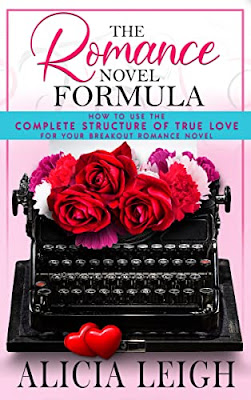
Deck the Halls with Books Holiday Extravaganza! The Romance Novel Formula by Alicia Leigh + giveaway


I grew up in a haunted house, so seeing ‘spirits’, ‘shadows’, and even my dead cat walking around was nothing new to me. Even so, when I visited America, I thought the ghostly realm had stayed behind in Australia. Not so!


After a grueling day, during which my flight had been delayed and the airline lost my baggage, I finally arrived at my hotel in Asheville, North Carolina.

As soon as I closed the hotel room door behind me, a figure materialized before me. It was a woman in 1800s clothes. She wore a burgundy outfit with a matching wide-brimmed hat that had a huge feather sticking out from it. I didn’t feel a threatening vibe from her, but I was tired and annoyed from the day, so I said out loud “I’m not in the mood for this” and she immediately vanished. I never saw her again but got shivers every time I was in the room.

Do ewe believe it? Ewe should!

Is there a secret formula for writing a successful romance novel?

The Romance Novel Formula
by Alicia Leigh
7th December 2021
Genre: Non-fiction
Publisher: A.K. Leigh
ISBN: 9781973593553 (Amazon)
ASIN: B09J48ZHJF
Paperback – app. 200 pages
Word Count: 24,000 words
Cover Artist: Sarah Paige (Opium House Creatives)
Backed by research and professional expertise, The Romance Novel Formula provides everything you need to take you from idea to first draft of your breakout romance novel.

Join best-selling romance author and academic researcher, Alicia Leigh, as you discover:

*How to take your love interests on the “lovers’ journey” – inclusive of ALL types of romantic relationships: ménage, alien, LGBTQI, polyamory, etc.
*A unique five-act structure to make your story easy to write and manage.
*The specific story “beats” exclusive to the romance genre (and which other books on writing typically exclude).
*The story and character arcs necessary to classify your book as romance.
*How to avoid stereotypes by focusing on archetypes.
*Popular romance tropes.
*Essential writing techniques.
*Advice on dialogue.
*The most common writing mistakes . . . and how to avoid them.
*Goal, motivation, and conflict.
*Fear, need, and flaw (what are they, and do you need them?).
*Much more!

Complete with checklists and over 30 writing exercises, The Romance Novel Formula is the new essential romance writing guide for aspiring and experienced writers, plotters and pantsers, and professional researchers.

Excerpt:

“Romance novels are written to a specific formula.” The number of times I’ve heard this insulting and patronizing phrase throughout my career as a romance writer would fill its own book! Yet, regardless of urban legends and popular culture tales, the simple fact is this: There is no romance novel formula.

Let me repeat that with emphasis: There is no romance novel formula.

Now, it might seem like I have contradicted the title of this book by saying that. However, there is more than one way to write a romance novel. This book is intended as a guide to assist you while giving you the freedom to find your own version of a formula.

While there is no set formula per se, there is a structure you can follow that will aid you in writing your breakout romance novel. This structure isn’t used solely by romance writers. Different forms are used by all novelists (see, for instance, books such as Story, Save The Cat! Writes a Novel, The Plot Whisperer, and Story Engineering, which have a variety of formulas, guides and suggestions). In that regard, writing a romance novel is almost the same as writing any other novel. I say almost because the romance genre has necessary inclusions that are applicable to it alone. This applies to every genre. These are called genre conventions.

Whether you are a novice or a seasoned writer, this book can lead you through the quagmire of structure and help you find the unique path for your characters to follow on what I call the lovers’ journey.


About the Author:
Website -FB-Instagram
Amazon Goodreads 

Alicia Leigh is a bestselling non-fiction author, international-selling romance author, identical triplet, writing coach, and hot chocolate addict.


She uses her postgraduate degrees in counseling from the Australian College of Applied Psychology and editing from Macquarie University to create believable, three-dimensional characters. Her certificates in forensic science and forensic anthropology from the University of Strathclyde add layers to the realistic crime elements in her stories. She has completed her master’s degree in writing at Swinburne University and is currently embarking upon her PhD in Creative Arts (writing) at Central Queensland University.

When not writing, reading, coaching, studying, or enjoying nature, she can be found having fun with her three gorgeous children (plus one laid-back dog and one hypersensitive guinea pig).

She is active on social media and encourages readers and writers to interact with her there. She writes romantic fiction novels under the pseudonyms A.K. Leigh and Leigh Hatchmann.

You can become a “loveleigh” by visiting:

www.fallinlovewithleigh.com

*Fall in love … with Leigh*

Tweet:
Is there a secret formula for writing a successful romance novel? Find out in The Romance Novel Formula, the new romance writing guidebook by Alicia Leigh
#theromancenovelformula #writingromance #romancewriters #romancewritingbooks #howtowriteromance

Tour Giveaway
3 paperback copies (for entrants who can have books delivered via Book Depository only)

a Rafflecopter giveaway

Monday, December 6, 2021

The Adventures of Doc Leeda - A Color-Coded Approach to Reading (Help for Dyslexia) by Mindy Reese + giveaway


The Adventures of Doc Leeda is a set of 11 books that use a color-coded technique for different phonetic sounds and features a fun female veterinarian that can communicate with animals. The color-coding approach for sound recognition helps children build reading confidence while simultaneously retaining the basic sound concepts and phonics lessons.


by Mindy Reese
Subject/Genre: Fiction/Instructional
Interest Level: Ages 5-9 / Grades K - 5
Readability: Lexile 450-530
ISBN: 978-1-63402-369-6
Publisher: HNB
Doc Leeda is a vet with a magical power—she can speak to and understand animals. Join her as she cares for sick and injured animals—and helps young readers learn the many ways to spell vowel phonemes.

Designed for teachers, parents, and aides to use in one-to-one and small-group learning, each book focuses on one phoneme, which is highlighted each time it appears in the text. Engaging full-color illustrations appear on every story page. Each book includes directions for an adult helper, and a review of concepts for the student.

Trey the Horse Gets a New Home (“long a” sound)
Trey the gray horse has come to live at Jane’s farm. Trey is afraid, until he meets Kay, who also lives on the farm. They make friends and trot off to play.

Lilly the Monkey Becomes a Mom (“long e” sound)
Lilly the monkey is about to give birth. When Doc Leeda examines Lilly, she has a big surprise for her. Zookeeper Haley doesn’t know why Lilly makes such a screech.

Niles the Bison Gets Hurt (“long i” sound)
Doc Leeda takes a bike ride and finds a bison lying down with a cut in his side. Doc Leeda takes care of him, then makes sure no other animals get hurt!

Odin the Goat Gets Sick (“long o” sound)
Odin the goat has eaten something that made him sick. Doc Leeda can’t figure out what Odin ate. But Sloan the toad and Bo the crow solve the mystery.

Sister Elephants Disagree (“short e” sound)
Emma and Ellen are sister elephants who have had a fight. The elephants said it was about food! Doc Leeda helps the elephants make up and share better!

Nick the Stingray Needs Help
 (“short i” sound)
Doc Leeda and her friend Lynn go swimming. They find a stingray tangled in a fish hook and line. Leeda wants to help him, but he has to promise not to sting her!

Molly the Otter Is Rescued (“short o” sound)
After a storm, two otters and an octopus wash up on the rocks. One otter is hurt. The octopus has lost an arm. They can’t go home until they are well!

Hunter the Duckling Is Lost (“short u” sound)
Doc Leeda’s dog, Rusty, finds a young duck under a shrub. The duckling has cut his foot. Doc Leeda takes care of him. Then she has to find his mother!

Dawson the Hawk Saves a Fawn (“aw” sound)
Doc Leeda and her dog take a hike. They find a hawk with his claw stuck. They free the hawk, who launches into the air. Then the hawk finds a hurt fawn. It’s a busy day for Doc Leeda!

Helping Brownie the Cow (“ow” sound)
Brownie the cow has hurt her hoof. When Doc Leeda goes to the barn, she hears a loud squeak. It is Clouse the mouse. Both Brownie and Clouse need Doc Leeda’s help!

Lou the Kangaroo Gets Adopted (“long oo” sound)
The zoo has a new baby kangaroo named Lou. Doc Leeda and Zookeeper Lucy explain to a group of kids that Lou lost his mother. They want another kangarooOona, to adopt him. Will Oona take him?


About the Author:
Mindy Reese’s book series The Adventure Doc Leeda was inspired by her children. Upon learning that her daughters had Dyslexia, she decided to use the background skills from her Master's research on visual stimuli effects on memory to help them with their reading difficulties.

Before writing children's books, Mindy was an engineer. After working in commercial aerospace, starting and selling an engineering consulting company, and working for the federal government she became a Stay-at-Home-Mom (SAHM) in order to focus more on her two children.  Mindy lives in Denver, Colorado with her husband, two daughters, and a super sweet dog. She now homeschools her daughters full time and writes on the side.

GIVEAWAY
win a full set of 11 books

Giveaway link