What inspired you to write this book?
Our son – now a grown man – used to love reading as a child. I usually bought him action-adventure books. In 2022, in search of something different to read, I browsed his shelves and thought I’d try The Savage Tales of Solomon Kane by Robert E. Howard. My God, the stories knocked my socks off! Howard is an amazing writer. Two of his stories – “The Hills of the Dead” and “Wings in the Night” – are the most exciting I’ve ever read. I’ve since bought all Howard’s collected fiction, and thoroughly enjoyed it.
So, my inspiration for Cretaceous Canyon was Robert E. Howard. His thrilling fiction motivated me to write my own suspenseful, action-packed novel. I hope I’ve succeeded.
What can we expect from you in the future?
My anthology Spawn: Weird Horror Tales About Pregnancy, Birth and Babies (IFWG Publishing 2021) featured work by Australian writers. It was nominated for six awards and won two of them, including the Australian Shadows ‘Best Edited Work’ Award.
I’d always envisioned Spawn as a trilogy. Currently, I’m working on Spawn 2: More Weird Horror Tales About Pregnancy, Birth and Babies. This sequel is open to submissions from Australasian writers (where Australasia means Australia, New Zealand, New Guinea, and the neighbouring islands of the Pacific). The submission deadline is October 31st.
Where did you come up with the names in the story?
I’m always irritated when reading a story that has, for example, James, Jack, Jackie and Jane as characters because I confuse them. So, when writing I have a general rule for character names that serves me well: the names must be vastly different from each other.
I choose names that (a) start with different letters, (b) vary in syllable length from one to four, (c) are from different eras, and (d) from different ethnicities. I Google popular baby names from particular years and countries, then mix and match until I’m satisfied. I do the same with surnames.
I used this technique for my seven main characters in Cretaceous Canyon, and the process took about an hour. Of course, the names have to suit the characters. I already had all seven in mind, so what actually took the longest was searching through my lists of perfectly appropriate names to find the exact ones that would fit my vision.
What did you enjoy most about writing this book?
My aim was to write an exciting, suspenseful and unputdownable novel. That’s a big ask! I enjoyed finding different ways to grip the reader’s interest. The thing is, if you use the same technique too many times, the reader will catch on and begin anticipating your surprises.
I think I was successful! Some of my reader reviews so far have included such comments as, “A non-stop, page-turning, visceral, heart-pounding thriller”, “a gut-wrenching, roller-coaster ride through six hours of time”, and “Was expecting to read for a half hour then go out for a walk. Instead, I read start to finish, and then had to shower cause I felt hot, sweaty and exhausted. What fun!”
Our son – now a grown man – used to love reading as a child. I usually bought him action-adventure books. In 2022, in search of something different to read, I browsed his shelves and thought I’d try The Savage Tales of Solomon Kane by Robert E. Howard. My God, the stories knocked my socks off! Howard is an amazing writer. Two of his stories – “The Hills of the Dead” and “Wings in the Night” – are the most exciting I’ve ever read. I’ve since bought all Howard’s collected fiction, and thoroughly enjoyed it.
So, my inspiration for Cretaceous Canyon was Robert E. Howard. His thrilling fiction motivated me to write my own suspenseful, action-packed novel. I hope I’ve succeeded.
What can we expect from you in the future?
My anthology Spawn: Weird Horror Tales About Pregnancy, Birth and Babies (IFWG Publishing 2021) featured work by Australian writers. It was nominated for six awards and won two of them, including the Australian Shadows ‘Best Edited Work’ Award.
I’d always envisioned Spawn as a trilogy. Currently, I’m working on Spawn 2: More Weird Horror Tales About Pregnancy, Birth and Babies. This sequel is open to submissions from Australasian writers (where Australasia means Australia, New Zealand, New Guinea, and the neighbouring islands of the Pacific). The submission deadline is October 31st.
Where did you come up with the names in the story?
I’m always irritated when reading a story that has, for example, James, Jack, Jackie and Jane as characters because I confuse them. So, when writing I have a general rule for character names that serves me well: the names must be vastly different from each other.
I choose names that (a) start with different letters, (b) vary in syllable length from one to four, (c) are from different eras, and (d) from different ethnicities. I Google popular baby names from particular years and countries, then mix and match until I’m satisfied. I do the same with surnames.
I used this technique for my seven main characters in Cretaceous Canyon, and the process took about an hour. Of course, the names have to suit the characters. I already had all seven in mind, so what actually took the longest was searching through my lists of perfectly appropriate names to find the exact ones that would fit my vision.
What did you enjoy most about writing this book?
My aim was to write an exciting, suspenseful and unputdownable novel. That’s a big ask! I enjoyed finding different ways to grip the reader’s interest. The thing is, if you use the same technique too many times, the reader will catch on and begin anticipating your surprises.
I think I was successful! Some of my reader reviews so far have included such comments as, “A non-stop, page-turning, visceral, heart-pounding thriller”, “a gut-wrenching, roller-coaster ride through six hours of time”, and “Was expecting to read for a half hour then go out for a walk. Instead, I read start to finish, and then had to shower cause I felt hot, sweaty and exhausted. What fun!”
What is your favorite part of this book and why?
The chapters involving the canyon’s river. I can’t say why because I don’t want to risk giving away spoilers for my own novel!
Suffice to say, these chapters were exciting and stressful to write.
Have you written any other books that are not published?
In my opinion, one of the best things I’ve ever written is the crime thriller Bodily Harm. Based on my unproduced screenplay of the same name, I wrote this contemporary novel about 10 years ago. Unfortunately, it’s a tough sell because publishers baulk at the novel’s raw violence and various trigger issues such as sexual assault.
By the way, if any publishers of hardcore crime are reading this interview and think Bodily Harm might suit their list, please contact me!
If your book had a candle, what scent would it be?
Eucalyptus and blood.
Convince us why you feel your book is a must read.
Have you written any other books that are not published?
In my opinion, one of the best things I’ve ever written is the crime thriller Bodily Harm. Based on my unproduced screenplay of the same name, I wrote this contemporary novel about 10 years ago. Unfortunately, it’s a tough sell because publishers baulk at the novel’s raw violence and various trigger issues such as sexual assault.
By the way, if any publishers of hardcore crime are reading this interview and think Bodily Harm might suit their list, please contact me!
If your book had a candle, what scent would it be?
Eucalyptus and blood.
Convince us why you feel your book is a must read.
A team on an expedition to explore a mysterious canyon in the Australian outback encounters Cretaceous-era dinosaurs.

by Deborah Sheldon
Genre: Horror, Action, Adventure, Dinosaur Lost World
Australia’s outback hides a mysterious canyon. Hidden deep within is a forest of pine tree that dates from the Cretaceous Period. A megacorporation sends in a team of experts to research this canyon for botanical riches.
The expedition enters a no-man’s land formed 100 million years ago when Australia was still attached to Antarctica, and dinosaurs ruled the super-continent. But the canyon has more prehistoric and dangerous species than anyone could have possibly imagined.
Trapped and terrified, unarmed and unable to communicate topside, the team’s extraction deadline is six long hours away.
The frantic race for survival is on.
READER REVIEWS
Robyn O’Sullivan (Goodreads) 5/5 stars – This book is a gut-wrenching, roller-coaster ride through six hours of time, ripping the reader every which way through emotional and physical upheavals that suddenly crash-land, leaving a sense of “Wow! What the hell just happened?”.
Steve Paulsen (Goodreads) 5/5 stars – Unputdownable! A non-stop, page-turning, visceral, heart-pounding thriller. Highly recommended!
by Deborah Sheldon
The hiss of the opening door drew everyone’s attention.
Good Christ! Alastair jumped to his feet.
It was Raj Devi himself, wandering into the conference room like a lost and befuddled grandfather, wearing slacks and a giant knitted cardigan. His hair and beard were salt-and-pepper, his seventy-two-year-old face frowning with its usual look of perpetual distraction.
Alastair raced towards the door and took its weight.
“Mr Devi!” he gasped, clumsily grasping his boss’s elbow. “What are you doing here?”
The old man glanced up, his gaze as sharp as darts, and whispered, “Rallying the troops.”
“Let me help you to a chair—”
“Thank you, I already know how to sit in a chair,” Raj said, and this time he lifted his voice, rolling it around the conference room, a deep and rich example of Received Pronunciation English, a baritone fit for the Shakespearean stage.
Alastair saw the effect on his recce team: everyone sat up straight. If he could figure out Raj Devi’s effortless ability to command an audience, then Alastair would rule the world.
“Everyone, pay attention,” Alastair said, his voice in comparison like a squeak to his own ears. “This is Raj Devi, your sponsor. You’re in the presence of a great man.”
Raj took Alastair’s chair and gazed around the table. No one rushed him. No one looked impatient. The silence was still and complete. He held them all in the palm of his hand, and Alastair both idolised Raj and hated him for this charisma, this absolute magnetism. Alastair had to remain standing, which was awkward, but the time for sitting was now lost.
With a half-smile, Raj nodded sagely. “I’m a believer in our power to make a better world,” he said, and the timbre of his voice sounded hypnotic; even Gloria was in thrall. “So, if you’ll indulge me, I’d like to tell you a story. A story about seeds. Leaves. Bark. Fruit. The human race has used plants to make medicines since before written language was invented. Traditional medicines date back thousands of years to Egyptian scrolls, Indian clay tablets, Chinese inscriptions etched on seashells and across the dried bones of oxen. Today, one in ten of our essential modern medicines is based on flowering plants. One in ten! My word.”
Lapsing into silence, Raj linked his fingers together on the table and closed his eyes. The seconds ticked on. Alastair checked the faces of his team and felt that he must say something, had to say something, or risk losing them. But what? God, the empty seconds kept ticking…
Alastair said, “Not just medicines! No, the plants we find today could also make new pesticides, and help farmers to breed disease-resistant crops—”
“All of us,” Raj Devi interrupted in his sonorous tone, “has taken a painkiller as simple as the aspirin. That miracle medicine was derived from the willow tree, its properties discovered by ancient Egyptians and other peoples such as Native Americans. Morphine is from the poppy. Today, plants help treat Parkinson’s Disease, diabetes, various cancers, heart disease, other ailments. Your work today could very well discover unknown plants that may herald a new age of medicine. Imagine, a cure for Alzheimer’s! It might be waiting for you, out there in that canyon. Waiting for all of us, the entire human race. Your hike has the potential to change the world, and save countless lives for generations to come. Oh, my goodness. What a legacy.”
The silence in the room was absolute. Alastair became aware that he was holding his breath. The team members appeared transfixed, mesmerised by the old man.
“Thank you,” Raj sighed. “Thank you for striving to help me make a better world.” He pushed out his chair, stood up, went to leave and then hesitated. “Please,” he added, “eat as much of the breakfast buffet as you can. It cost me a small fortune!”
He laughed and everyone joined in. Like Pavlov’s dogs to a bell, they automatically reached for Danish pastries, croissants, donuts, muffins, goat cheese tarts, fruit skewers.
Alastair stopped Raj at the door. The old man glanced up at him, cold and annoyed.
Taken aback, Alastair found himself stammering. “Gosh, sir, that was a…that was a…”
“What?”
“Such a terrific, inspiring speech—”
“I don’t take notes.”
“Oh, I didn’t mean—”
“Focus on the hike. Don’t fuck it up,” Raj said, and put his hand on the door.
“I’ve put together a competent team,” Alastair said, striving to appear confident. “I’m just wondering if you think it’s absolutely necessary that I go with them into the canyon.”
Raj gave a frosty smile. “Hmm. I don’t know. Do you think you’re necessary?”
“Well, yes, in the creation of the team—”
Raj raised his eyebrows. “And now that the team has been created?”
“Ha-ha! I’m sorry, I’m not sure—”
“You’re not sure if you’re necessary anymore?”
Sweat beaded on Alastair’s hairline. “No. I mean, yes. I’m still necessary, sir.”
“Okay.” Raj patted him on the arm. “Enjoy your hike.”
“Yes, sir.”
Raj left the room. Alastair watched him shuffle along the hallway towards the bank of lifts, where he would take a ride to the building’s top floor and probably take a fucking nap. Raj Devi walked like an old man in his seventies, which is what he was, and his refusal to put on a false front was admirable in a way that stuck in Alastair’s craw. Only a multi-millionaire could afford to drop the façade, wear slacks with a baggy cardigan, let his paunch hang out.
Amazon-Goodreads
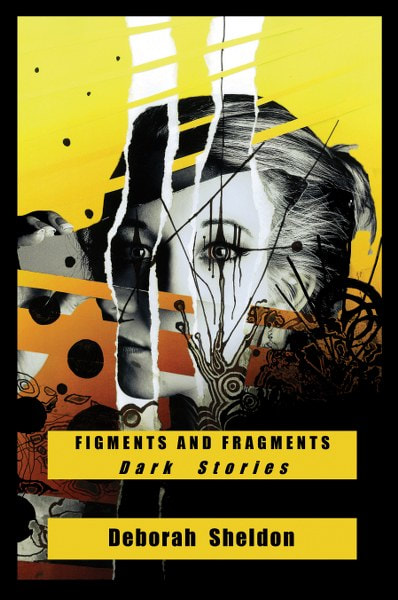
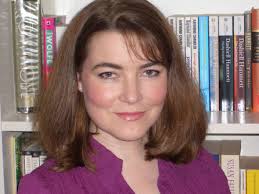
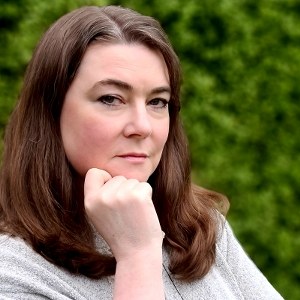
DEBORAH SHELDON is an award-winning author from Melbourne, Australia. She writes short stories, novellas and novels across the darker spectrum of horror, crime and noir. Her award-nominated titles include the novels Body Farm Z, Contrition and Devil Dragon; the novella Thylacines; and the collections Figments and Fragments: Dark Stories and Liminal Spaces: Horror Stories.
Her collection Perfect Little Stitches and Other Stories won the Australian Shadows ‘Best Collected Work’ Award, was shortlisted for an Aurealis Award and longlisted for a Bram Stoker. Deb’s short fiction has appeared in many well-respected magazines such as Aurealis, Midnight Echo, Andromeda Spaceways, and Dimension6, been translated, shortlisted for numerous Australian Shadows Awards and Aurealis Awards, and included in various ‘best of’ anthologies such as Year’s Best Hardcore Horror.
She has won the Australian Shadows ‘Best Edited Work’ Award twice: for Midnight Echo 14 and for the anthology she conceived and edited, Spawn: Weird Horror Tales About Pregnancy, Birth and Babies.
Deb’s other credits include TV scripts such as NEIGHBOURS, feature articles, non-fiction books (Reed Books, Random House), stage plays, poetry and award-winning medical writing.
DEBORAH SHELDON is an award-winning author from Melbourne, Australia. She writes short stories, novellas and novels across the darker spectrum of horror, crime and noir. Her award-nominated titles include the novels Body Farm Z, Contrition and Devil Dragon; the novella Thylacines; and the collections Figments and Fragments: Dark Stories and Liminal Spaces: Horror Stories.
Her collection Perfect Little Stitches and Other Stories won the Australian Shadows ‘Best Collected Work’ Award, was shortlisted for an Aurealis Award and longlisted for a Bram Stoker. Deb’s short fiction has appeared in many well-respected magazines such as Aurealis, Midnight Echo, Andromeda Spaceways, and Dimension6, been translated, shortlisted for numerous Australian Shadows Awards and Aurealis Awards, and included in various ‘best of’ anthologies such as Year’s Best Hardcore Horror.
She has won the Australian Shadows ‘Best Edited Work’ Award twice: for Midnight Echo 14 and for the anthology she conceived and edited, Spawn: Weird Horror Tales About Pregnancy, Birth and Babies.
Deb’s other credits include TV scripts such as NEIGHBOURS, feature articles, non-fiction books (Reed Books, Random House), stage plays, poetry and award-winning medical writing.
GIVEAWAY
Follow the tour HERE for special content and a giveaway!
$10 Amazon
a Rafflecopter giveaway
Follow the tour HERE for special content and a giveaway!
$10 Amazon
a Rafflecopter giveaway